

A Data Scientist uses data, statistics, programming and machine learning to solve complex business problems and help organisations make better predictions or decisions. To become one, you usually need strong foundations in data analysis, Python, statistics, machine learning, data visualisation and practical project work.
Businesses in 2026 are using more data, automation and AI, which makes skilled data professionals increasingly valuable. The World Economic Forum lists Big Data Specialists and AI and Machine Learning Specialists among the fastest-growing jobs to 2030, which shows how strongly the market is shifting towards advanced data skills.
This guide breaks down the Data Scientist role in a clear, practical way, including the work you would be doing, the credentials that can strengthen your route in, and the steps to take if you want to move towards your first data science role.
Written by
Adam is a Senior Career Consultant at Learning People, specialising in helping people move into IT, Project Management, Cyber Security, Software Development, and Cloud Computing roles through personalised 1:1 consultation. He understands well which skills and certifications employers value most in today’s fast-evolving tech landscape.

Want the most cost-effective way to launch your Data Scientist career?
Our Data Analyst to Data Scientist pathway is designed to help you move beyond reporting and towards the more advanced skills employers expect from data science candidates. You’ll build a structured foundation in areas such as Python, statistics, modelling and machine learning, while developing the kind of practical project evidence that can strengthen your resume and portfolio.
-
Key qualification: Build the data science skills employers look for, from analytics through to Python and machine learning.
-
Bespoke coaching: Get support with your resume, portfolio, interviews and job search strategy.
-
Exclusive network: Access employer opportunities through Learning People’s network.
Visit our Data Analyst to Data Scientist course page to learn more and find out pricing.
1. What is a Data Scientist?
A Data Scientist is a data professional who uses data to uncover patterns, test ideas and build models that support better decisions, from predicting customer behaviour to spotting risk or improving services.
They bring immense value to organisations by turning complex information into practical direction. In a business setting, that might mean helping a team forecast demand, reduce fraud, improve customer experience, personalise products or understand where performance is slipping.
This is usually a role people build towards, rather than a first step into data. Many Data Scientists start in roles such as Data Analyst, Data Technician or Machine Learning Assistant before moving into more advanced modelling work. You do not need to be an AI expert on day one, but you do need strong foundations before you move into machine learning.
Can Data Scientist be an entry-level role?
Sometimes, but I’d be honest here: Data Scientist is more often a role people work towards after building solid data analysis experience. That does not mean you need formal data science experience before you start. It means your route needs to be structured.
I would usually recommend building your analyst foundations first, then moving towards data science through recognised training and practical projects. If you can show Python, statistics, data cleaning, visualisation and machine learning thinking through documented work, the path becomes much more realistic.
What does a Data Scientist do? Core responsibilities
A Data Scientist uses data and statistics to answer complex questions, build predictive models and support better business decisions. They combine analysis, programming, statistics and machine learning to turn large or messy datasets into useful insight.
Core responsibilities usually include:
-
Data preparation: Cleaning, organising and shaping raw data so it can be analysed or used in models.
-
Exploratory analysis: Looking for patterns, trends, relationships and outliers that could explain what is happening.
-
Model building: Creating statistical or machine learning models that predict outcomes or classify information.
-
Model evaluation: Testing how well a model performs and checking whether it is reliable enough to use.
-
Insight communication: Explaining findings, limitations and recommendations to technical and non-technical teams.
Day in the life of a Data Scientist
A Data Scientist’s day usually moves between understanding the problem, preparing data, testing ideas and explaining what the results mean. In practice, that might include:
-
Clarifying the business question: Working out what problem the model or analysis needs to solve.
-
Preparing datasets: Cleaning data, handling missing values and joining information from different sources.
-
Exploring patterns: Using Python, SQL or visual tools to understand what the data is showing.
-
Testing models: Training, comparing and improving models to see which approach works best.
-
Explaining results: Presenting findings, model limitations and next steps to stakeholders.
What is a Data Scientist’s salary?
2. Certifications You Need to Become a Data Scientist
The most useful certifications for becoming a Data Scientist are the ones that prove you can analyse data, use Python, understand reporting, and progress towards machine learning. Recruiters often use certifications as a benchmark, especially when someone is changing careers without a data science degree or direct experience.
In my view, this is where many beginners get stuck: they try to build advanced models before they are confident with the data underneath them. So here is a pathway I would recommend to go from beginner to Data Scientist.
|
Level |
Recommended certification path |
Professional value |
|
Foundation |
Builds the analysis, reporting and decision-support skills that help you move into data-focused roles, especially if you are coming from a non-technical background. |
|
|
Entry-level |
Gives beginners a recognised introduction to Microsoft Azure, including cloud services, security, pricing and support. Useful for understanding the cloud environments where data tools and applications often run. |
|
|
Professional |
Python is one of the most widely used programming languages in data science because it supports data cleaning, analysis, automation and machine learning. This course helps you move from basic programming concepts into more technical data work. |
|
|
Advanced |
Helps you progress from analysis into statistics, modelling, machine learning and more advanced data science tasks. |
Our data courses can be tailored to your starting point, goals and target roles, whether you are moving from beginner level, data analysis or another technical background.
3. Key Skills Required for a Data Scientist
The key skills needed for a successful Data Scientist are data analysis, programming, statistics, machine learning and communication skills. The role is about solving useful problems with data and explaining what the results can and cannot prove.
Technical and hard skills a Data Scientist needs
-
Statistics: Understanding probability, distributions, correlation, regression and uncertainty so you do not misread patterns or overstate findings.
-
SQL and databases: Pulling data from databases and understanding how information is stored, structured and accessed.
-
Python programming: Writing code to clean data, analyse datasets, build models and automate repetitive tasks.
-
Machine learning: Building models that can classify, predict or detect patterns from data.
-
Data visualisation: Using charts, dashboards or notebooks to make findings easier to understand and explain.
-
Quality assurance: Testing accuracy, bias, errors and limitations before a model is trusted in a business setting.
Core soft skills a Data Scientist needs
-
Commercial curiosity: Asking whether the analysis solves a real business problem.
-
Critical thinking: Questioning data quality, assumptions and whether a pattern actually means anything useful.
-
Communication: Explaining complex models in a way non-technical teams can understand and act on.
-
Patience: Working through messy data, failed models and unclear results without giving up too quickly.
-
Ethical judgement: Understanding that data science decisions can affect real people, especially in AI-driven systems.
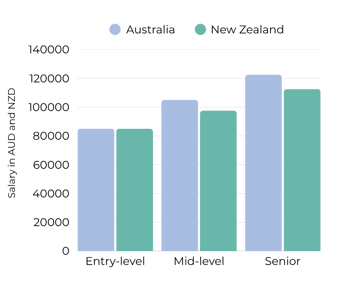
Did You Know? Data professionals earn above the national average salary
The average salary for mid-level data roles is $95,000 and $115,000 in Australia, and $90,000 to $105,000 in New Zealand.
Average salaries for data roles consistently exceed the national average in both countries.
Find more data job market insights in our frequently updated industry mini-report.
4. The Roadmap: How to Become a Data Scientist Step-By-Step
To become a Data Scientist, you need to be strategic about the route you take, especially if you are starting from scratch or moving across from another career. Here’s the step-by-step route I’d recommend.
Step 1: Research data science and analyst job descriptions
Start by comparing job descriptions for Data Scientist, Junior Data Scientist, Data Analyst, Junior Data Analyst, BI Analyst, Machine Learning Assistant and Analytics Engineer roles.
Look for the skills that appear again and again. You will usually see Python, SQL, statistics, machine learning, Power BI or Tableau, cloud platforms, data cleaning, Git and communication.
Comparing Data Scientist roles with Data Analyst roles is useful because it it helps you understand what each job actually involves so you can better decide which route is for you.
Step 2: Build your data analysis base
Data science rests on solid analysis foundations, so start with the basics before jumping into advanced models. Build confidence with Excel or spreadsheets, SQL, data cleaning, basic statistics and visualisation.
This stage is crucial. If you cannot clean, organise and explain data clearly, machine learning will feel very confusing. Practise answering simple business questions first, such as which product performed best, where customer drop-off happened, or what changed between two time periods.
Step 3: Learn Python, statistics and machine learning
Python, statistics and machine learning are the technical backbone of most data science roles. Start with practical Python foundations, including core syntax, functions and working with data.
Then build your understanding of regression, classification, clustering and model evaluation. The aim is not to memorise every algorithm. It is to understand when to use a model, why it works, what its limits are and how to explain the result clearly.
Step 4: Earn professional validation
Structured training can help you build data science skills in the right order and show employers that your knowledge has been tried and tested. Certifications and recognised pathways can also help your resume pass recruiter checks and ATS (Applicant Tracking Systems), which is especially important if you do not have a data science degree.
While you study, create practical outputs alongside the qualification. That could include Python notebooks, cleaned datasets, simple models, dashboards, short reports and project write-ups that explain your thinking.
Step 5: Build a project portfolio and apply strategically
A data science portfolio should show how you think, not just that you can run code. Build two or three strong projects rather than lots of unfinished notebooks.
Each project should include the problem, dataset, cleaning process, analysis or model, evaluation and business recommendation. Good examples include customer churn prediction, sales forecasting, fraud detection, sentiment analysis or a product recommendation project.
Update your resume and LinkedIn around Python, SQL, statistics, machine learning, data cleaning, visualisation and communication. Then apply strategically for roles that match your current skill set and move you closer to data science. It also helps to connect with data professionals, recruiters and alumni, and ask what their first role was or if relevant what helped them move from analysis into data science.
Conclusion: What’s My Next Move for Becoming a Data Scientist?
The next move is to compare current Data Scientist and Data Analyst job descriptions, then identify the tools, skills and certifications employers keep asking for. You will usually see Python, SQL, Power BI, statistics, and communication.
Data Scientist is a realistic long-term goal, but most beginners get there more successfully by building strong analyst foundations first. Once you can clean, analyse and explain data confidently, it becomes much easier to move into more advanced data science work. That might mean starting with a Data Analyst, Junior Data Analyst or BI role while you keep building your data science portfolio.
At Learning People we can help you map that journey properly, from choosing the right data science pathway to structured learning, portfolio guidance, resume support, interview preparation and access to employer opportunities.
Ready to plan your route into data science? Enquire today to speak with a data career consultant.