

How to Learn AI to Future-Proof Your Career
There’s a lot of noise right now about AI taking jobs. And yes, AI is changing the way work is done in almost every sector. But the smartest response isn’t to panic, it’s to adapt. In this guide, I walk you through how to identify what AI skills you need, and crucially, how to develop them.

Though we're still in the first half of 2026, there’s already a lot of noise about AI taking jobs. And yes, AI is changing the way work is done in almost every sector. But the smartest response isn’t to panic, it’s to adapt - and autumn presents the perfect opportunity to put this adaptation into action.
The people who will thrive in the coming years are the ones who understand how to use AI to their advantage. That means building the AI skills employers are actively looking for in your field.
At Learning People, we’ve seen this shift firsthand. We include AI training in every one of our Career Pathways (whether it’s cybersecurity, project management, software engineering, data analytics, or cloud computing) because employers expect it, regardless of the sector.
We speak to people every day who feel they “should” learn AI but aren’t sure where to start. The truth is, AI only feels overwhelming when you try to learn everything.
Our advice? The trick is to learn the AI skills that matter for the actual career you want. Learn AI in a vocational way.
Here’s how.
Written by
As our Head of Education, Mark is passionate about ensuring Learning People delivers world-class curricula and training for people who want to launch or progress their careers in IT, Coding, and Project Management.

What's on this page?
Jump to:
- Why is Learning AI so Critical in 2026?
- How Learning AI with Purpose will Benefit your Career
- What Areas of AI Do You Need to Learn for Different Roles and Sectors?
- How to Start Learning AI Today (Step-by-Step Advice)
- Final Thoughts: Don’t Aim to Master All AI — Aim to Master Your Career
- FAQs about Learning AI
Why is Learning AI so Critical in 2026?
Across Australia and New Zealand, AI is reshaping how work is done and which skills are in demand. The shift is already underway, and it’s moving faster than most people think.
Recent research by Google found that nearly four in five (79%) employees in Australia say their organisation supports them in trying new AI tools. In New Zealand, 56% of employees feel hopeful or excited about AI, above the global average of 49%.
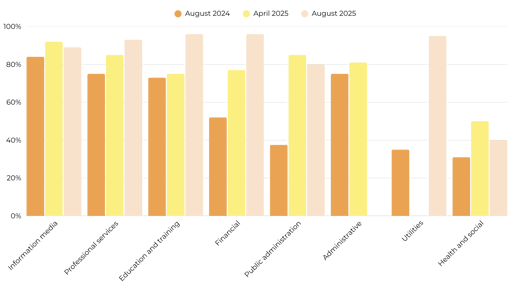
These developments aren’t limited to factory floors or IT departments; it’s affecting white-collar roles in education, finance, professional services, and beyond. With nine in 10 organisations in Australia seeing role changes as a direct result of AI use, AI skills are clearly non-negotiable, regardless of sector.
At the same time, skills shortages aren’t going away - many employers say they’re struggling to find candidates who can work confidently with AI tools. The Digital Transformation Agency (DTA) estimates that the Australian Public Service (APS) may face a digital talent shortfall of 8,000+ people by 2030. Conversations around AI-proof jobs are continuing, amidst rapid growth in AI-driven roles in cybersecurity, cloud engineering, data analysis and software development.
Our Career Services team puts it simply:
"AI skills are no longer a nice-to-have for almost all sectors, especially in tech: they’re critical must-haves."
This is why now is the right time to act. AI will continue to evolve, but you don’t need to become an AI engineer to stay ahead. The goal is to understand how AI is being used in your field and to build the skills to use it effectively. Those who start learning now will have a head start in a job market that’s getting more competitive every year.
Fact: Over half of workers have not received AI skills training
Dayforce's latest report revealed that only 17% of organisations in Australia and New Zealand are actively upskilling their staff in AI.
Despite the majority of workers agreeing that AI has made their job easier, over half have yet to receive any AI-specific training. This means it may become your responsibility to sufficiently upskill.

How Learning AI with Purpose will Benefit your Career
If the idea of learning AI feels overwhelming, you’re not alone. AI is a huge, constantly evolving field, and most beginner guides make it sound even more intimidating. They often start by telling you to master advanced maths, statistics, and programming before you even touch an AI topic.
For most people, that’s a fast track to giving up before you’ve even begun. The time, cost, and energy required to follow that route makes sense if your goal is to become a full-time AI engineer or researcher. But that’s not what the majority of career changers, or even tech professionals, are aiming for.
The truth is, you don’t need to build AI models from scratch to benefit from AI in your career. You don’t need to understand every algorithm in detail to make use of the tools. What you do need is the ability to use AI confidently and effectively in the context of your role or industry.
Think about it like driving a car: you don’t have to design the engine or build the gearbox to be a safe, skilled driver. You just need to know how to operate it. And, over time, how to get the best performance from it. AI is no different.
This is why we always recommend starting with a career focus, whether it's AI for Project Management, Cyber Security, Data, and so on. By understanding where AI fits in your sector, you can target your learning to the tools, platforms, and use cases that will actually make you more employable – instead of trying to learn all of AI and getting lost in the process.
Fact: AI is positively impacting the Australian economy
According to one of the latest reports by the Commonwealth Scientific and Industrial Research Organisation (CISRO), the AI market in Australia is predicted to be worth $315 million by 2028.
This continued growth means the creation of new and exciting jobs and opportunities for Australia's workforce. Notably, Project Managers are leading the way with AI integration across Australia and New Zealand, with a person-centred approach to AI being key to effective AI implementation in project management.
What Areas of AI Do You Need to Learn for Different Roles and Sectors?
One of the quickest ways to waste time (and money) learning AI is to dive into every possible topic without a clear destination in mind. AI is vast, so the smart approach is to focus on how it’s being used in your target field, and build skills around those applications.
Here are some examples:
1. Cyber Security:
AI is being used for real-time threat detection, analysing huge volumes of data to flag suspicious activity faster than humans can.
2. Project Management:
AI-powered tools are automating routine admin, forecasting timelines, and identifying risks before they become problems.
3. Data Analysis:
Machine learning models are at the heart of extracting insights from complex datasets – a core skill for data analysts and scientists.
4. Software Development:
AI can help write, review, and test code more efficiently, freeing up developers to focus on problem-solving and creative design.
5. Cloud Computing:
AI supports dynamic resource allocation and predictive scaling in cloud environments, improving performance and cost-efficiency.
Before you commit to learning AI, be clear on where you want your career to go...
"Without a focus, it’s easy to disappear down the AI rabbit hole and come out the other side with a lot of knowledge you’ll never use.
At Learning People, we take this targeted approach in all our learning pathways. Whether you choose data analytics, software engineering, project management, or cyber security, your training includes the AI tools and methods most relevant to that sector. That way, you’re not just learning AI; you’re learning the right AI skills to thrive in your chosen career."

How to Start Learning AI Today (Step-by-Step Advice)
Getting started with AI doesn’t have to mean months of research before you take your first step. The key is to keep it practical, focused, and tied to your career goals. Here’s a five-step approach we recommend to our students.
1. Define your career goal
Before you open a single AI tutorial, decide where you want to go. Do you see yourself in Cyber Security, Project Management, Data Analysis, Software Engineering, or another IT field? Your destination will shape the AI skills you need.
2. Research how AI is impacting that industry
Look for real examples of AI in your chosen sector: think industry blogs, company case studies, and job ads. They can all give you clues. If most employers are asking for experience with a specific tool or workflow, that’s a clear sign of where to focus.
3. Choose the skills, knowledge, and certifications that align with that need
Once you know what’s in demand, identify the specific skills to learn. This could be anything from prompt engineering for generative AI, to using machine learning models for predictive analysis, to working with AI-powered security tools. Certifications can help prove your abilities to employers.
4. Pick a structured learning path (not just random YouTube videos)
Free online content can be great for quick tips, but it’s no substitute for a structured pathway that builds your skills in the right order and alongside other essential qualifications. That’s why our Career Pathways include AI modules within broader certifications, giving you both depth and career-ready breadth.
5. Get career support as you learn
Learning AI is only half the journey. Landing a role where you can use it is the other half. Seek out training providers that offer career coaching, CV guidance, and interview prep. At Learning People, our wraparound career support helps you turn your new skills into a real job opportunity.
Final Thoughts: Don’t Aim to Master All AI — Aim to Master Your Career
You don’t need to become an AI expert to benefit from it. What matters is learning the skills that will help you work smarter, stay relevant, and stand out in your chosen field in 2026. AI is a tool, and like any tool, it’s most powerful when you know exactly how to use it for the job at hand.
Some words of advice from a Careers Consultant:
“You don’t need to be an AI expert, but you do need to understand it. Talk to us today to find the right pathway for you and start building skills that employers are actively looking for.”
Don’t get stuck trying to learn everything at once. Start with clarity on your career goal, then take action to build the AI skills that will genuinely make a difference, ready for big recruitment drives at the start of the new financial year.
If you’re not sure where to begin, that’s what we’re here for. Our Career Consultants can help you design a flexible, affordable Career Pathway, in sectors like data analytics, software engineering, cybersecurity, and more – all with the AI training you’ll need.
FAQs about Learning AI
Related Articles
 Getting a Job With No Experience
How to Get a Coding or Software Development Role With No Experience: Expert Guidance
Breaking into coding or software development without experience is possible if you focus on the right skills, build proof through projects, and apply for suitable entry-level roles. In this guide, I walk through the practical steps that can help you get started with more clarity and confidence.
Read More Project Management
How to Get a Project Management Job With No Experience
Discover the transferable skills and certifications that can help you land a project management job with no experience.
Read More Career Advice
Choosing between freelance and full-time employment: What’s best for your career?
Choosing between freelancing and full time work depends on valuing flexibility versus stability, with each path offering distinct financial and lifestyle implications. Let's explore how features of each might suit your personal preferences.
Read More Career Advice
Choosing Between Public and Private Sector Careers: A Comprehensive Guide for Tech Professionals
Explore the differences between public and private sector careers, including job security, salary potential, and work-life balance, to make an informed career choice.
Read More