

How to Conduct a Personal Skills Audit for a Career Change
Planning a career change? Start with a personal skills audit. By mapping out your strengths and areas for improvement, you’ll be better prepared to decide which moves to make next.

Changing careers isn’t something most people do on a whim. It usually starts with a lot of self-reflection. One of the most useful tools we recommend to people at this stage is a personal skills audit.
By taking the time to map out what you’re good at (and where you’d like to improve), you’ll be in a far stronger position to make decisions about professional training, upskilling, or even a complete career change this autumn.
If you’re considering your next step, our career change guide is another great place to start.
Written by
With over 3 years working at Learning People supporting students in their career search, Flo is here to offer one-to-one personal guidance, which proactively supports you as you venture towards your new or expanded career.

What Is a Skills Audit?
A skills audit is simply a structured way of reviewing your abilities, knowledge, and experience to see how they match up against your career goals. Think of it as taking stock of everything you bring to the table — from technical expertise to transferable soft skills like problem-solving or communication.
For some people, it’s their first chance to really see their strengths written down in black and white. For others, it highlights gaps they’ll need to address through training or new experiences. Either way, it gives you a clearer picture of where you stand today and what you might need to reach the role you’re aiming for.
Why Should I Conduct a Personal Skills Audit?
Most people considering a career change already have more transferable skills than they realise. The challenge is recognising them and knowing how they fit into new roles. A personal skills audit helps with exactly that.
By carrying one out, you can:
-
Identify strengths you can confidently showcase to employers
-
Spot areas where upskilling or training would add the most value
-
Compare your current abilities against the requirements of roles you’re interested in
-
Make better decisions about where to focus your time, energy, and money
In short, it stops you guessing and gives you a practical roadmap for career growth or transition.
How to Conduct a Personal Skills Audit
A personal skills audit doesn’t need to be complicated. The key is breaking it into simple steps so you can move from reflection to action. Here’s a straightforward approach we often recommend to career changers:
-
List your current skills: Write down everything you can do — technical skills, soft skills, and even those gained outside of work, like volunteering or hobbies.
-
Group your skills: Split them into categories such as technical, transferable (e.g. teamwork, communication), and personal qualities. This makes it easier to compare later.
-
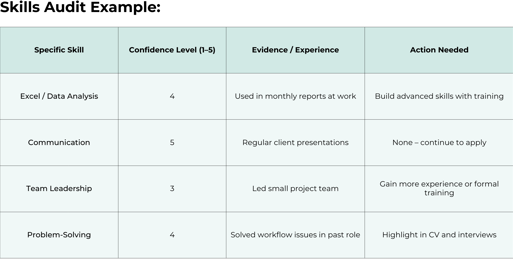
Rate your confidence level: Give each skill a score (for example 1–5). Be honest about where you feel strong and where you’d like to improve.
-
Compare with target roles: Look at job descriptions in your chosen field and see which skills appear most often. This shows you where you already match up and where there are gaps.
-
Plan next steps: Decide which areas to develop through training, mentoring, or hands-on experience.
By the end, you’ll have a clear picture of your strengths, your gaps, and the action you need to take.
Skills Audit Example and Template
It can be hard to picture what a skills audit looks like until you’ve seen one written out. Below is a short example that shows how someone might record their skills, confidence level, and next steps.
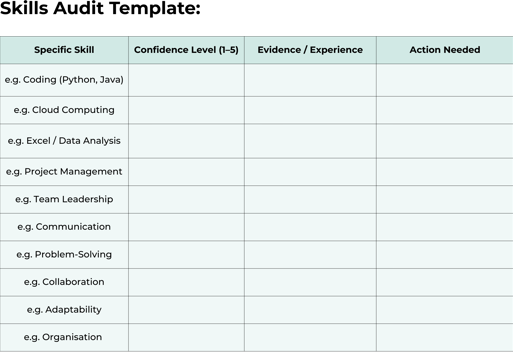
Now it’s your turn. Use this blank template to record your own skills. We’d recommend adding 8–12 skills at first, spread across technical, transferable, and personal qualities.
Want to fill a specific skill gap fast?
Introducing Learning People Lite, our new online store which offers a completely new way to upskill with us.
If you're looking for a fast, affordable way to fill specific skills gaps and earn digital badges, our short online courses on Learning People Lite start from just £149 and take as little as 8 hours to complete.
Take a look at our library of short courses in cyber, AI, data, and digital marketing.

Final Thoughts: How a Skills Audit Can Shape Your Next Step
A personal skills audit is a simple exercise, but it can have a big impact. By taking the time to list your strengths, rate your confidence, and spot areas for improvement, you create a clear foundation for planning your next career move.
We talk every day to people who only realise how much they already bring to the table once they’ve seen their skills written out. It’s often the spark that helps them decide whether to retrain, upskill, or take the leap into a completely new field.
If you’d like support in building on your skills audit and mapping a pathway into tech or project management this autumn, our Career Consultants are here to guide you.
Personal Skills Audit FAQs
Related Articles
 Getting a Job With No Experience
How to Write a Resume for a Job With No Experience
Learn how to write a resume that shows skills, training and projects when you have no work history and read example 'no experience' resumes.
Read More Changing Career
How to Write a Career Change Cover Letter, with Examples
A strong career change cover letter follows five steps: a confident opening naming the role, genuine motivation for the company, transferable skills linked to past achievements, evidence of relevant training or certifications, and a closing that reinforces your value and enthusiasm.
Read More Changing Career
How to Change Career at 50: The Steps and Advantages of a Later-in-Life Career Change
Changing careers at 50 isn't just possible: it can be the start of your most rewarding work yet. Experience, resilience, and transferable skills give older career changers a real advantage, opening doors into high-paying, flexible fields like project management, cybersecurity, and data analysis.
Read More Getting a Job With No Experience
How to Write a Cover Letter for a Job With No Experience
Learn how to write a confident cover letter for a job with no experience. Use our clear framework and examples to highlight skills, motivation and potential.
Read More