

5 Highest Paying Tech Roles in the UK Right Now [April 2026]
With the ever-changing world of tech, what are the roles that pay the most in the UK in April 2026?

Tech is often seen as an ideal industry to get into with high demand and huge opportunity for certain tech career paths, and some attractive salaries to match. But what jobs are available in 2026 and how much do those roles pay?
The UK government recently confirmed a new wave of funding for tech and AI, solidifying that this sector is a lucrative career choice with plenty of prospects. From cybersecurity to AI, there are constant developments within the world of tech and skilled professionals are in short supply.
As an ever-evolving market, new job titles are created to keep up with the constant growth this sector is seeing, but what are the highest paying roles (asides from the obvious like CIO, CISO, CTO) as of April 2026?
By analysing the latest salary data from Robert Half, Totaljobs and Reed, I've collated the five highest paid tech roles in the UK (and their salaries) into one digestible article.
Written by
With four years at Learning People and a solid foundation in IT and Cybersecurity, Chris guides people through the fast-evolving tech landscape and into their dream jobs. He combines hands-on technical expertise with insider industry insights to help learners make informed career decisions.

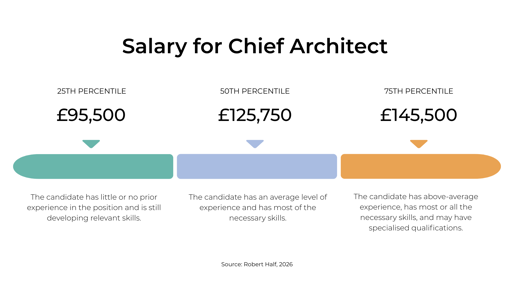
1. Chief Architect: £95,500 - £145,500
Chief Architects are strategic tech leaders who align business goals with IT infrastructure. They need a deep understanding of systems architecture, cloud computing, and cybersecurity.
Certifications in AWS Certified Solutions Architect or Microsoft Azure Solutions Architect can boost job prospects. A background in IT or software development is typically expected, alongside leadership or project management experience.
The salary for a Chief Architect in the UK ranges from £95,500 - £145,500 making it a very appealing role.
Similar roles have also seen an increase in average salaries over the past year - 9.9%+ for Security Architects and 4.2%+ for Technical Architects.
2. Head of AI: £90,000 - £205,000
A Head of AI is a senior leader who is responsible for creating an organisation’s AI strategy, leading AI technology development, and deploying AI solutions to improve business outcomes. They bridge the gap between technical know-how and business strategy, covering ethics, governance, and AI adoption.
As a strong background in data science as well as AI and machine learning is required for this role, certifications like CompTIA Data+ and Microsoft Certified: Power BI Data Analyst Associate PL-300 can help set you a part in a competitive job market.
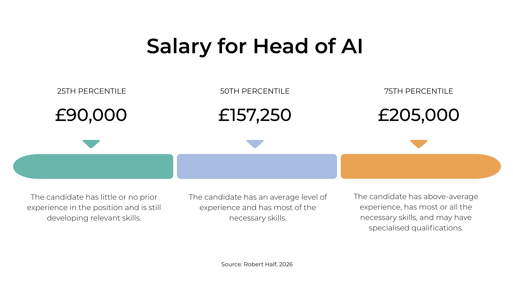
The salary for a Head of AI in the UK ranges from £90,000 - £205,000, making it an exciting and lucrative role, despite it being a relatively new one.
AI skills are currently in demand across multiple sectors, with salaries for AI Engineers reaching as high as £116,800 in London.
3. DevOps Manager: £82,000 - £113,000
A DevOps Manager is a senior professional who leads the integration of software development and IT operations. Day-to-day, they'll be helping automate workflows, mentoring engineers, enforcing security compliance, and more.
Proven, extensive experience in cloud computing, cybersecurity and system administration is necessary for DevOps Managers. As a result, certifications like AWS Certified Solutions Architect, CompTIA CySA+ and CCISO are great training options for aspiring DevOps Managers.
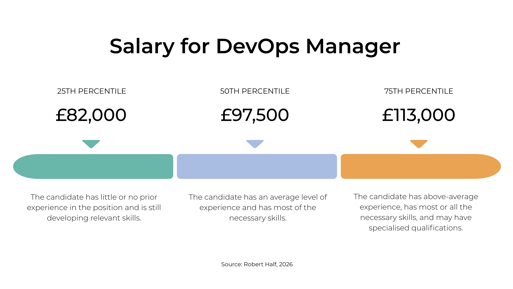
The salary for a DevOps Manager in the UK ranges from £82,000 - £113,000, making it the ideal role for DevOps Engineers to progress to.
4. Information Security Manager: £60,000 - £84,750
In charge of protecting an organisation’s data and systems from cyber threats. Information Security Managers need expertise in risk management, compliance and network security.
Key skills include strategic thinking, leadership, and up-to-date knowledge of security trends. Cybersecurity certifications like CISSP, CISM, or CompTIA Security+ are often required, along with experience in cybersecurity or IT security roles.
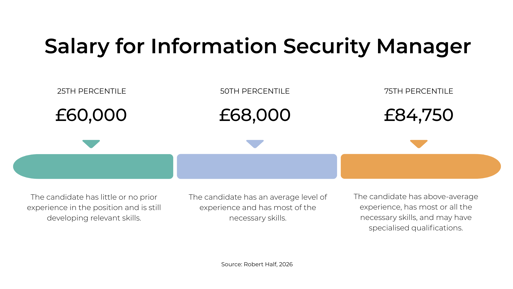
Earn between £60,000 - £84,750 in a role that puts you at the frontline of protecting businesses from cyber threats.
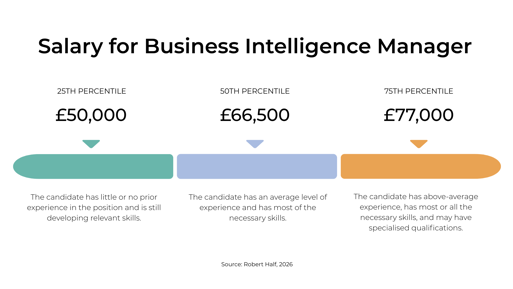
5. Business Intelligence Manager: £50,000 - £77,000
A Business Intelligence (BI) Manager is a strategic leader who oversees the collection, analysis and reporting of data, that guides key corporate decision-making. They manage teams of analysts and developers to transform raw data into digestible dashboards and actionable goals.
Strong data and business analysis skills are non-negotiable, meaning certifications like BCS Foundation Certificate In Business Analysis extremely beneficial for BI Managers. AgilePM® and Change Management certifications also provide important foundational knowledge in project management.
The salary for a Business Intelligence Manager in the UK ranges from £50,000 - £77,000, illustrating the appeal of a career in business analysis.
Want to start a lucrative, future-proof career in tech?
If you're ready to take the first step toward a high-paying tech career, our industry-recognised courses at Learning People are designed to equip you with the skills and certifications employers are looking for.
Can we help you find a high paying tech job?
I asked one of my colleagues, a Senior IT Career Consultant at Learning People, what he says to people hoping to pivot into a high-paying career in IT or tech. He told me,
“A big driver for a lot of people is salary. Of course, we all want to earn as much as possible, but we also want jobs we will enjoy and be good at. We need to choose careers that have prospects and longevity.
Working in tech for a lot of my students ticks all the boxes, plus it offers added benefits like hybrid working and being able to take their qualifications anywhere in the world.
I try to set realistic expectations with students; you have to work your way up to these senior roles and salaries, but it is possible!”.
With expert support and flexible learning, there's never been a better time to retrain. Don’t wait for the perfect moment, start building your future in tech today.
Related Articles
 Changing Career
How to Write a Career Change Cover Letter, with Examples
When changing careers, the way you apply for jobs will be different from usual, and this includes how you write your cover letter. As a career advisor, I share some of the advice, tips, and tricks for writing a career change cover letter, as well as an adaptable cover letter template and examples.
Read More Changing Career
Am I Too Old to Change Career?
Many professionals in their 30s, 40s and 50s question whether it’s too late to change career, especially when financial commitments, identity and perceived age bias are involved. This guide examines where that fear comes from, how age bias plays out in the UK job market, and why transferable skills often carry more weight than age alone.
Read More Career Advice
What The Changing Entry-Level Job Market Means For UK Tech Career-Changers
The latest research from the UK government is providing insight into the challenging nature of the UK entry-level job market. With overall entry-level hiring down 14%, having career-ready skills and qualifications is vital for those looking to make the switch to tech or project management.
Read More Tech
Tech957,000 Young People In the UK Are Not Working or Studying, Despite the Demand for Tech Skills Surging
New figures from Alan Milburn’s Young People and Work interim report have revealed that nearly one in eight 16-to 24-year-olds in the UK were not in paid work, education or training at the end of 2025. At the same time, employers are staring down a major skills gap in the tech sector: the industry expected to power the next decade and beyond.
Read More