

To get into change management, you usually need to understand how organisations plan and deliver change, build strong communication and stakeholder management skills, gain recognised change or project management certifications, and show evidence that you can support people through transition.
Change management is crucial in 2026 because change is no longer something businesses deal with once every few years. It is constant. Organisations are introducing new systems, adopting AI, restructuring teams, improving processes, responding to regulation, and rethinking how people work.
Recent research found that projects with excellent change management are up to seven times more likely to achieve change success, which shows how much difference the right support can make when people are being asked to work in new ways.
In this guide, I’ll explain what a change management career looks like, which skills and certifications help, and the steps you can take to move into change management from entry level or a different career background.
Written by
With over a decade of experience in project management education and industry, Matt has become our in-house expert. Matt is the Director of Enrolments at Learning People, consistently helping students to advance their careers through learning and certification.

What’s the fastest way into a Change Management career?
Our APMG Change Management Foundation course helps you build one of the key qualifications for understanding how organisational change works. You’ll follow a structured route that covers the fundamentals of change, including how people respond to it, how to support adoption, and how to help teams move towards new ways of working.
- Key qualification: Build a recognised change management certification that supports your move into people-focused change roles.
- Career support: Get help with your CV, LinkedIn, applications, and interview preparation so you can present your experience clearly.
- Exclusive network: Access job opportunities through our employer network.
Visit our Change Management Foundation course page to learn more about the programme and its pricing.
1. What Is a Change Management Career, and What Does It Look Like?
A change management career is about helping organisations plan, communicate, deliver, and embed changes so people can adopt new ways of working successfully. It is often described as the people side of business change.
A project might introduce a new system, structure, process, policy, or way of working. Change management helps make sure people understand what is changing, why it is happening, and how to work with it day to day.
What does a career in change management involve?
A career in change management usually involves assessing the impact of change, communicating with stakeholders, supporting adoption, managing resistance, and tracking whether new ways of working are being embedded.
Common tasks include:
-
Impact assessment: Understanding who is affected by a change, what will be different, and what risks need managing.
-
Stakeholder engagement: Speaking with teams, leaders, users, customers, or suppliers to understand concerns and build support.
-
Communication planning: Creating clear messages so people know what is changing, why it matters, and what they need to do.
-
Training and support: Helping people learn new tools, processes, or behaviours.
-
Adoption tracking: Checking whether the change is actually being used.
As you progress, the work often becomes more strategic. You may move from supporting individual projects to leading change across departments, programmes, or whole organisations.
The main disciplines in change management
Change management includes several routes, which means you can choose a path that fits your strengths, whether you are more people-focused, process-focused, or delivery-focused.
|
Discipline |
Focus |
What it looks like in practice |
|
Business change |
Helping organisations adjust how they work |
Supporting changes to processes, structures, services, teams, or ways of working. |
|
Digital transformation |
Supporting technology-led change |
Helping people adapt to new systems, platforms, automation, AI-enabled tools, or digital processes. |
|
Change communications |
Making change clear and understandable |
Planning the messages, channels, and timing so people know what is changing, why it matters, and what they need to do. |
|
Training and adoption |
Helping people use new tools or processes |
Creating guidance, supporting training sessions, answering questions, and helping teams build confidence. |
|
Organisational development |
Improving culture, behaviours, and team effectiveness |
Looking at leadership, ways of working, employee engagement, and how teams respond to change. |
|
Change portfolio support |
Coordinating several changes at once |
Helping track multiple change initiatives, spot overlaps, manage dependencies, and reduce change fatigue across the business. |
Progression in change management careers
Change management careers often start in project support, change coordination, HR, communications, operations, or business analysis before moving into specialist change roles.
A typical pathway can look something like this:
-
Entry-level: Project Administrator, Change Assistant, PMO Assistant, Communications Assistant
-
Junior level: Change Coordinator, Project Coordinator, Junior Business Change Analyst
-
Mid-level: Change Analyst, Business Change Manager, Change Communications Specialist
-
Senior level: Senior Change Manager, Transformation Manager, Organisational Change Lead
-
Management: Change Programme Manager, Head of Change, Change Portfolio Lead
-
Leadership: Director of Transformation, Chief Transformation Officer, COO pathway
Can Change Management Be an Entry-Level Career?
Yes, change management can be an entry-level career, but most people start by supporting change rather than leading it straight away.
You might begin in a role where you help organise project updates, gather feedback from teams, write simple process notes, support training sessions, or keep track of who needs to know what. That might not sound glamorous, but it is exactly the kind of practical experience you need to get started and build confidence.
Certifications can also help you understand the structure behind change, especially if your previous experience is in admin, customer service, HR, operations, training, or communications.
The key is to show that you can help people understand what is changing, why it matters, and what they need to do next.
2. What Skills and Certifications Are Needed for a Career in Change Management?
A career in change management usually needs a mix of business knowledge, project awareness, communication skills, stakeholder management, and recognised change management certifications. The good news is that you can build these skills step by step, even if your current job title has nothing to do with change.
Foundational skills (The “hard” skills)
-
Change readiness analysis: Working out who is affected, what is changing, and what support is needed.
-
Stakeholder mapping: Identifying the people who influence, approve, deliver, or experience the change.
-
Project management basics: Understanding timelines, risks, actions, governance, and delivery stages.
-
Process mapping: Seeing how work happens now, and how it needs to work after the change.
-
Data and adoption tracking: Using feedback, surveys, usage data, or performance measures to see whether the change is sticking.
-
Change messaging: Building clear messages for the right audiences at the right time.
Critical soft and human skills
-
Communication: Explaining change clearly, without hiding behind corporate language.
-
Empathy: Understanding why people may feel worried, tired, sceptical, or overloaded.
-
Influence: Building support without relying only on authority.
-
Resilience: Staying steady when plans shift or people push back.
-
Facilitation: Running workshops, feedback sessions, and conversations that help groups move forward.
-
Listening: Spotting concerns early, especially the ones people do not say publicly in meetings.
The certification roadmap
Change management certifications help you understand recognised methods for planning change, supporting people, and embedding new ways of working. Here is how I would recommend you approach it:
The certifications you need will depend on your background and the kind of change role you want. For example, APMG Change Management is a strong route for people-focused change, while AgilePM Foundation or PMI Project Management Professional (PMP) can help if you want to work closely with project delivery.
Our project and change management training can be built around where you are now, the kind of role you want to move into, and the certifications that fit your next step. Alongside your training, you’ll have access to learning support, live classroom sessions, career guidance, CV and LinkedIn support, and job opportunities through our employer network, LEAP Careers.
You can visit our change management course page to explore the training options in more detail, or use the button below to request a free consultation with one of our career advisors.
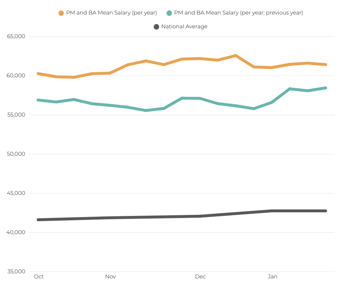
Did you know? Change Management professionals earn above the national average salary
The mean UK salary for project management roles for October 2025 to January 2026 was £61,448, which is 43.6% above the national mean salary.
Mean salaries for change and project management roles have increased significantly compared to 2024.
Find more project management job market insights in our frequently updated industry mini-report.
3. How Do I Break Into Change Management? The Step-by-Step Sequence
To break into change management, start by understanding the different role routes, building project and business change knowledge, gaining a recognised certification, collecting examples of change-related work, and applying for entry-level or bridge roles.
Below is a step-by-step guide I recommend.
Step 1: Understand what kind of change work suits you
The first step into change management is to understand the different types of change roles and choose a realistic starting point. This helps you avoid aiming too broad and gives your learning a clearer direction.
Search job adverts for roles such as Change Coordinator, Project Coordinator, PMO Assistant, Junior Business Change Analyst, Change Communications Assistant, Training Coordinator, Transformation Assistant, and Business Analyst Assistant.
You will start to see the differences between business change, digital transformation, change communications, training and adoption, and organisational development. The goal is not to pick your forever niche. It is to find the first route that matches your existing strengths.
Step 2: Build your business and project foundations
The second step is to understand how organisations plan work, make decisions, manage risks, and deliver projects. Change rarely happens by itself. It is usually part of a project, programme, restructure, technology rollout, or process improvement.
Start by learning basic project terminology, risk logs, stakeholder maps, project plans, communication plans, process maps, and benefits tracking. These are the everyday building blocks of change work.
If project management is the timetable, change management is helping real people get on the right train without leaving half the team standing on the platform wondering where their seat went.
Step 3: Get a recognised change management certification
The third step is to gain a recognised change management certification so employers can see you understand structured change methods. APMG Change Management Foundation is a sensible starting point because it introduces the principles behind organisational change and how people respond to it.
From there, APMG Change Management Practitioner can help if you want to apply those ideas in more detailed workplace scenarios. AgilePM or PMI Project Management Professional (PMP) can also support you if you want to work closely with project teams, digital transformation, or structured delivery.
Certifications help your CV, especially where recruiters filter for named qualifications. But they work best when paired with real examples of change work, even small ones.
Step 4: Build evidence from projects, work, or volunteering
The fourth step is to collect evidence that you can help people understand, accept, and adopt change. This evidence does not have to come from a formal change management job.
You could:
-
Help document a new process
-
Support a software rollout
-
Create a training guide or FAQ
-
Run a feedback survey after a change
-
Map stakeholders for a small project
-
Help communicate a team restructure or new workflow
-
Volunteer to support a charity, club, or small business through a process change
For each example, write a short case-study note. What changed? Who was affected? What communication or support was needed? What was the outcome? This gives recruiters something concrete to read, rather than a vague claim that you are “good with change”.
Step 5: Reframe your CV, LinkedIn, and applications around change
The fifth step is to rewrite your CV and LinkedIn so they show your change-related skills, not just your previous job titles. This is especially useful if you are moving from another career.
Customer service can show communication, empathy, and handling resistance. HR can show people processes, policy change, and employee engagement. Admin can show coordination, documentation, and accuracy. Training can show adoption support and knowledge transfer. Operations can show process improvement and stakeholder coordination.
Then look for bridge roles that let you build change experience in a direction that suits you. If you are drawn to technology, that might mean supporting digital transformation or software rollout projects.
If you enjoy people-focused work, HR, training, internal communications, or employee engagement roles can be a good route in. If you are more process-minded, project support, PMO, operations, or business analysis roles can help you build the coordination and stakeholder skills change teams need.
Conclusion: What’s My Next Move for Breaking Into Change Management?
Your next move for breaking into change management is to identify the type of change work that fits your strengths, build the right foundations, and start gathering evidence that you can support people through transition.
Change management is a strong route if you enjoy communication, problem-solving, organisation, and working with people. But you do not need to aim for a senior transformation role straight away. The best starting point is to learn the basics, gain a recognised certification, and build examples from work, volunteering, or small projects.
At Learning People, we support learners with structured project and change management training, recognised certifications, career guidance, CV and LinkedIn support, and help through the application and interview process.
If you want support choosing the right change management pathway, you can enquire to speak with one of our expert career advisors.