

Cloud job market insights and report: Trends and statistics for the UK cloud sector [June 2026]
Based on current data taken from Adzuna, one of the UK's largest job search engines, we've identified the clear trends and figures that define the state of the cloud sector job market today. This report was last updated in June 2026.

What's on this page?
Jump to:
- Cloud computing salary trends
- Trends in demand for cloud professionals
- Industries hiring cloud professionals in 2026
- Common benefits offers for cloud roles
- Trends in remote and hybrid working for cloud roles
- Demand by location for cloud roles
- Where does this data come from and what does it mean?
- Is a cloud career for you?
Cloud salaries are 80.1% above the national average

- Despite an incline in February 2026, the mean salary for cloud roles remains far higher than the national average.
- The mean salary for cloud roles January 2026 to April 2026 inclusively is £77,936.
Demand for cloud professionals remains high compared to the national average

- The total number of unique postings for cloud job roles on the Adzuna website, January 2026 to April 2026: 1,725.
- The number of new postings for cloud job roles on the Adzuna website, January 2026 to April 2026: 1,500.
- The dip in unique and new postings at the end of January is due to seasonal trends - both increase as expected moving into spring, with a staggering 35.7% YoY increase for new postings.
Communications and finance industries among the top hiring cloud professionals
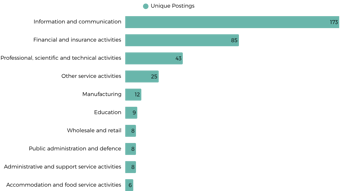
The demand for cloud computing professionals is growing - as we move further into 2026, organisations across a variety of sectors are increasingly relying on cloud infrastructure to improve operational efficiency, enhance customer experiences, and safeguard sensitive data.
Top benefits for cloud roles include private healthcare and flexible working
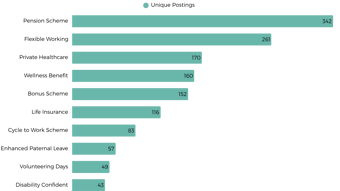
The data above is calculated from 1,024 (59.4%) unique cloud job role postings.
608 (35.2%) unique postings offered at least one benefit.
Over 60% of cloud roles are flexible or remote

- 55.1% of cloud computing job roles were listed on Adzuna as hybrid or flexible roles.
- 35.2% required on-site work.
- 9.7% were fully remote.
Southern England has the highest demand for cloud professionals
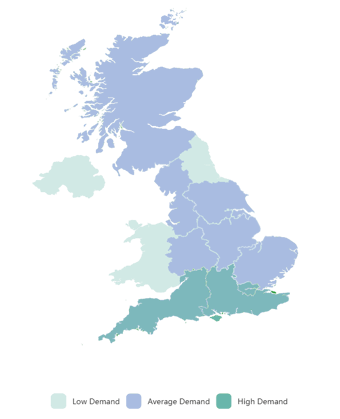
London leads cloud job demand with 652 job openings on Adzuna, reflecting its status as a major business hub. The South East follows with 220 unique postings, and the South West with 133 for the period January 2026 to April 2026.
Where does this data come from and what does it mean?
To create this report, we've partnered with Adzuna, one of the UK's biggest job search engine platforms and an extremely comprehensive source of job market data.
Based on millions of job postings, the Adzuna Intelligence database gives us a better understanding of job or specific role demand in the cloud sector. It also helps us identify trends related to salary, geographic location within the UK, the kinds of benefits that are being offered to cloud computing professionals, and much more.
These insights into the cloud job market provide an overview of January 2026 to April 2026.
The purpose of this? To give you insight into the job market that can guide your career choices as well as decision about training and development within the cloud computing sector, ensuring better alignment with market demands.
The following cloud job titles were included when collecting the data for this report:
| Cloud Architect | Cloud Consultant |
| Cloud Engineer / Cloud Infrastructure Engineer | Cloud Solutions Architect |
Find out if a career in cloud is right for you
Learning People is here to help you unlock your potential.
Our cloud computing certification courses will provide you the industry relevant skills and knowledge to succeed in a career as a cloud professional.
With flexible learning options, career support, and certifications from industry leaders, we’ll empower you to take the next step toward your dream career in cloud.
Ready to find the right path for you? Start your cloud journey with Learning People and get in touch today.
Read our latest articles
 Getting a Job With No Experience
How to Write a CV for a Job With No Experience
Learn how to write a CV that shows skills, training and projects when you have no work history and read example 'no experience' CVs
Read More Changing Career
How to Write a Career Change Cover Letter, with Examples
When changing careers, the way you apply for jobs will be different from usual, and this includes how you write your cover letter. As a career advisor, I share some of the advice, tips, and tricks for writing a career change cover letter, as well as an adaptable cover letter template and examples.
Read More Changing Career
How to Change Career at 50: The Steps and Advantages of a Later-in-Life Career Change
Changing careers at 50 isn't just possible: it can be the start of your most rewarding work yet. Experience, resilience, and transferable skills give older career changers a real advantage, opening doors into high-paying, flexible fields like project management, cybersecurity, and data analysis.
Read More Getting a Job With No Experience
How to Write a Cover Letter for a Job With No Experience
Learn how to write a confident cover letter for a job with no experience. Use our clear framework to highlight skills, motivation and potential.
Read More