

Project Manager Careers: How to Become a Project Manager
Starting salaries from £35K-£60K | Earn 44% above the national mean salary
Learn the skills, certifications and practical steps needed to become a job-ready Project Manager, even if you’re starting from entry level or changing careers.

Project managers plan, execute, and close projects by leading teams, managing budgets, and ensuring deliverables meet specific organisational goals on time. To enter the field, you generally need to build foundational leadership and organisational skills, gain experience in team settings, and earn industry-recognised certifications like CAPM or PMP.
Driven by tight budgets and digital shifts, companies across tech, finance, and healthcare rely heavily on Project Managers to navigate organisational change. This widespread demand makes it a highly versatile career path, fuelling a projected global talent shortage of 30 million professionals by 2035.
In this article, I’ll walk you through what a Project Manager does, what the role involves day to day, which qualifications can help, and the actionable steps you can take to work towards a project management role, even if you're changing career and starting with no formal project experience.
Written by
Gaby Marsom is a dedicated Career Consultant who specialises in project management. She works closely with students and professionals to help them unlock their potential, shift career paths, and thrive in competitive industries.

What's the most cost-effective way to launch your project management career?
Our complete project management training program is one of the fastest, most cost-efficient ways to go from "no experience" to "job market ready" in just a matter of months. We deliver everything you need to break into the industry and get hired:
-
Key Qualifications: Earn the exact credentials employers demand.
-
Bespoke Coaching: Get personalised guidance to ace your interviews.
-
Exclusive Network: Gain direct introductions to hiring companies.
Visit our page below to learn more about our career-launching program and its pricing.
1. What Is a Project Manager?
A Project Manager is the person responsible for planning, organising and guiding a project from idea to completion. They bring incredible value to any business by keeping work structured, people aligned, deadlines visible, and risks under control.
This role exists across many seniority levels. Some people work towards it after starting in project support roles, such as Project Administrator, Project Coordinator or PMO Analyst. Others move into junior project management after building transferable experience in operations, admin, customer service, marketing, education, hospitality, retail or team leadership.
Can Project Manager be an entry-level role?
While “Project Manager” can sound like a role reserved for people with years of experience, it is a realistic career path for beginners. Many people start in project support roles, then move up as they build confidence and delivery experience.
If you can show that you understand how projects work, have the right certifications, and can bring order to deadlines, people and priorities, you can start building a strong case for your first project role.
What does a Project Manager do? Core responsibilities
Project managers drive initiatives from concept to completion by defining scope, aligning stakeholders, coordinating resources, mitigating risks, and tracking progress to ensure successful delivery.
Core responsibilities usually include:
-
Defining project outcomes: clarifying what the project needs to achieve, what is in scope, and how success will be measured.
-
Keeping stakeholders aligned: keeping clients, senior leaders, suppliers and internal teams informed and aligned.
-
Resource coordination: making sure the right people, tools and information are available at the right time.
-
Managing change and blockers: spotting what could go wrong early, escalating problems and helping the team stay on track.
-
Delivery reporting: tracking progress, updating documents and communicating what has changed, what is delayed and what needs a decision.
Day in the life of a Project Manager
A typical day is a mix of planning, communication and problem-solving. No two projects look exactly the same, but here is what a typical day looks like:
-
The daily stand-up: checking progress with the team and identifying issues.
-
Stakeholder reporting and alignment: updating decision-makers on progress, risks and next steps.
-
Resource and timeline checks: reviewing deadlines, workloads and dependencies.
-
Risk and issue management: dealing with problems before they affect delivery.
-
Documentation and governance: updating project plans, action logs, risk registers and status reports.
What is a Project Manager’s salary?
Project Manager salaries in the UK commonly range from around £32,000 to £75,000+, depending on sector, location and seniority. Between October 2025 and January 2026, the mean salary for project management roles was £61,448, which was 43.6% above the national average.
2. Certifications You Need to Become a Project Manager
Recruiters in 2026 use project management certifications as a benchmark for professional knowledge, especially when you are applying without years of direct project management experience.
These credentials show that you understand recognised project methods and have taken a structured route into the profession. Without them, candidates with previous experience or even capable career changers can find it harder to stand out.
We usually recommend a tiered approach, so your qualifications match your starting point and the type of project role you want to target.
|
Level |
Recommended Certification Path |
Professional Value |
|
Foundation |
A strong starting point for beginners and career changers. Builds broad project management knowledge and helps you understand the full project lifecycle, including planning, communication, risk, budgeting and teamwork. |
|
|
Entry-Level |
It equips you with the skills and knowledge necessary to apply the fundamentals of Agile Project Management and successfully deliver Agile projects from start to finish. |
|
|
Professional |
An advanced certification that shows employers that you can apply PRINCE2 methods and principles in real working environments. |
|
|
Advanced |
Designed for experienced project professionals who want to prove they can lead complex projects, manage teams and work at a more strategic level. |
For those serious about working towards a Project Manager role, our project management courses can be tailored to your goals, experience and target sector, so you build the right skills and certifications for the roles you want to apply for.
3. Key Skills Required for a Project Manager
To be successful in project management, you need a mix of practical project skills, people skills, and industry-recognised certifications. All of these can be learnt or developed with the right approach, and you do not need years of formal project experience to get started.
Technical and hard skills a Project Manager needs
-
Scheduling and milestone management: You need to understand how to build realistic timelines, track deadlines and spot where delays could affect the wider project.
-
Budget and resource awareness: You need to understand how time, cost, people and capacity affect delivery, even if you are not managing the full budget at entry level.
-
Risk analysis: You need to know how to identify possible problems, assess their impact and decide what needs action, monitoring or escalation.
-
Project documentation: Clear documents help everyone understand the plan, decisions, progress and next steps.
-
Project tools: Many roles ask for confidence with tools such as Microsoft Project, Jira, Trello, Asana, Monday.com or Excel.
Core soft skills a Project Manager needs
-
Stakeholder management: You need to understand what different people care about and manage expectations without overpromising.
-
Communication: A good Project Manager makes complex or messy information easy to understand.
-
Problem-solving: Projects rarely go exactly to plan, so you need to stay practical when deadlines, budgets or requirements change.
-
Calm confidence: You need to lead conversations, ask direct questions and challenge politely when something is not on track.
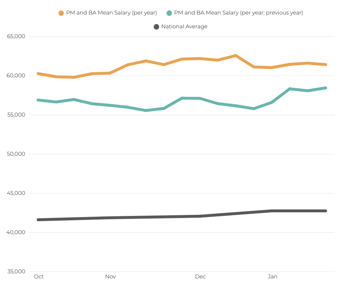
Did you know? Project management professionals earn above the national average salary
The mean UK salary for project management roles for October 2025 to January 2026 was £61,448, which is 43.6% above the national mean salary.
Mean salaries for project management roles have increased significantly compared to 2024. Learn more in our project management job market insights mini-report.
4. The Roadmap: How to Become a Project Manager ( Step-by-Step)
If you are looking at how to become a project manager from scratch, you need a tactical approach. You should not just apply for project manager roles and hope for the best. Here’s how I recommend you approach it.
Step 1: Research the industry and choose your entry point
Do not aim straight for a senior Project Manager role. Start by researching job descriptions for Project Coordinator, Project Administrator, PMO Analyst, and Junior Project Manager roles.
Look at sectors that interest you, such as tech, construction, healthcare, finance, digital, marketing, or operations.
Notice the requirements that keep appearing (e.g., PRINCE2, Agile PM, or Excel). This gives you a clearer first target.
Step 2: Build your project management foundations
Before you can manage a project, you need to understand how projects work. Start with the basics: the project lifecycle, scope, timelines, budgets, risks, stakeholders, reporting, and delivery methods.
Then start thinking in project language. Organising events, managing campaigns, coordinating rotas, supporting an office move, or helping roll out a new system can all show useful project skills.
Step 3: Get the right certifications
Getting the right certifications is one of the clearest ways to start building credibility in project management, especially if you do not have direct project experience yet. They give your CV the professional weight it needs to pass recruiter checks and Applicant Tracking Systems (ATS).
While you study, focus on understanding the PRINCE2 foundational principles such as clearly defined roles and responsibilities, managing by stages, and learning from experience.
Step 4: Create proof that you can manage work
If you do not have years of project experience, you need evidence. This can come from:
-
Coordinating a team rota or shift schedule
-
Supporting the rollout of a new tool, system, or process at work
-
Organising a training session, workshop, or onboarding process
-
Creating a budget, timeline, and task list for a community project
-
Coordinating suppliers, venues, speakers, or volunteers for an event
-
Helping a sports club, charity, or local group improve how they organise tasks
A simple project portfolio can help. You might include a project brief, timeline, risk log, stakeholder map, or lessons learned document.
Step 5: Rework your CV and apply for the right roles
Your CV should not just list past duties. It should translate your experience into project language. For example, “handled customer complaints” can become “managed stakeholder expectations under pressure.”
Use keywords from job descriptions naturally, especially around planning, reporting, risk, stakeholders, AgilePM, PRINCE2, and coordination.
Then apply for roles that get you close to project delivery. Such as:
-
Project Administrator
-
Project Coordinator
-
PMO Administrator
-
PMO Analyst
-
Junior Project Manager
-
Delivery Coordinator
-
Operations Coordinator
-
Change Coordinator.
If you want to move into IT or digital project management, look for tech-adjacent roles where you can build confidence around systems, software teams, or digital delivery. It also helps to connect with project professionals, recruiters, and alumni, and ask what their first role looked like.
Conclusion: What’s My Next Move for Becoming a Project Manager?
Project management is a realistic career path for career changers and starters, especially if you build the right mix of project knowledge, recognised certifications, and practical evidence.
As a project careers advisor, my recommendation would be to start with focused research. Look at entry-level roles. Notice the skills, tools, and certifications employers keep asking for, then choose a training route that matches those roles.
Our project management training is designed to help with this. It can support you with certification planning, structured learning, CV preparation, interview support, career guidance, and access to employer opportunities through our network.
If you’re ready to take the next step, enquire today to speak with a project management consultant about your personalised route into project management.